
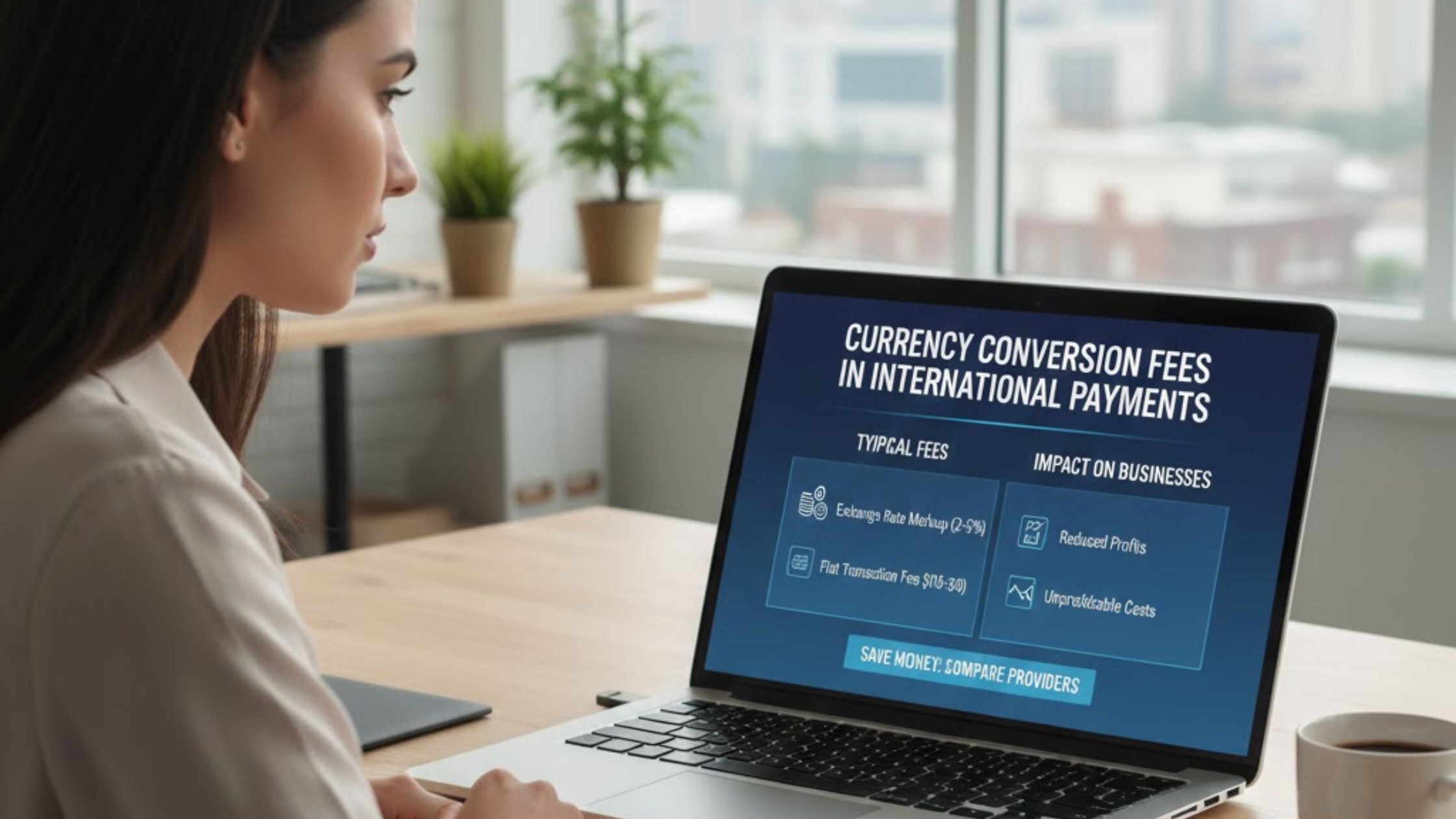
You’re sending money overseas, and then you get a surprise: a charge nobody mentioned. You look at your statement and realize you got hit with currency conversion fees that basically ate into whatever you were trying to accomplish in the first place. If you’ve ever sent money internationally or traveled abroad, you know that feeling. It’s frustrating because it feels like someone’s hand is in your pocket without you knowing.
The thing is, most people don’t actually understand what’s happening when their money crosses borders. Your bank shows you an exchange rate that looks reasonable. But the actual rate you get? Totally different. That gap between what the real rate is and what they give you is where the money disappears.
So how do you actually minimize these charges? It’s not as complicated as banks want you to think. Let us walk you through what’s really going on and what you can actually do about it.
What Happens When You Get Hit With Currency Conversion Fees?
When your money moves from one country to another, someone’s got to exchange it. That exchange isn’t free. Banks don’t just convert your dollars to euros out of the goodness of their hearts. They charge foreign exchange fees in international transactions for doing it.
There’s something called the mid-market exchange rate. That’s the actual real rate between two currencies at any given moment. But when your bank converts your money, they’re not giving you that rate. They’re giving you their rate. And their rate always favors them.
Then there’s stuff like ATM fees on top of the conversion charge, settlement delays that cost you in additional markups, and minimum transaction amounts that don’t make sense. Every layer is designed to move money from your pocket to theirs. And honestly, most people never notice because they’re not paying attention to what the real rate should be.
What makes this even worse:
- Every single transaction gets its own hidden costs in international money transfers fees attached to it
- If you’re sending money regularly, you’re paying these fees over and over
- Banks charge more during certain times of day when fewer people are watching
- Withdrawing cash from ATMs abroad stacks fees on top of fees
- Businesses that process international payments get absolutely hammered compared to individuals
Ways to Reduce FX Charges Without Jumping Through Hoops
Reducing FX charges for global payments on foreign exchange fees starts with picking the right way to move your money. Not every option is equal. Some ways will straight up cost you way more than others. Here is multi-currency transaction fees explained:
First thing: avoid traditional banks for international transfers. A typical bank charges you like 45 bucks just to send money, then tacks on a 3 percent FX markup on top. If you’re sending 5,000 bucks, that’s 45 plus 150 in conversion charges. Do that 20 times a year, and you’re looking at 3,000 dollars just evaporating into bank fees. A fintech company built for international transfers? They might charge you 2 dollars flat and give you the actual mid-market rate with almost no markup. The same 20 transfers cost you 40 dollars instead of 3,000.
Now, if you run a business, a reliable international payment gateway is your friend. Instead of sending five separate $2,000 transfers, combine them into one $10,000 transfer. You pay the fee once, rather than five times. The same idea applies when you’re collecting payments from customers worldwide. Fewer transactions means fewer times you get hit with conversion charges.
Ways to cut down the hit:
- Batch multiple transfers into single, larger transfers to reduce per-transaction costs.
- Use fintech providers instead of banks for better rates and lower flat fees.
- Monitor exchange rates and move money when rates are favorable rather than waiting randomly.
- Open multi-currency accounts if you regularly deal with several currencies, so you can hold funds and convert strategically.
- Negotiate with banks if you’ve got real transaction volume they care about.
For bigger businesses with real transaction volume, don’t just accept what your processor quotes you. Talk to them. Ask for better rates. Would they rather keep your business at a better rate or watch you leave for a competitor who offers something better? Banks know this, so they’ll negotiate. You won’t know unless you ask.
How Reducing FX Charges Means Keeping More Money in Your Business?
Look, when businesses are moving money internationally, most payment processors treat currency conversion like it’s their personal ATM. They charge you like crazy and act like that’s just how it works. Cathedral Payments doesn’t do that.
We actually built our system as the best way to avoid currency conversion costs, not to squeeze your entire business profits. You get transparent pricing so you see exactly what you’re paying upfront. No hidden stuff buried in settlement delays or surprise charges that show up on your statement three weeks later. You see the number, you know what it is.
Cathedral Payments approves and makes accounts live in 2 to 5 business days. That matters when you need to start accepting international payments quickly instead of waiting around. Also integrates with all the major e-commerce platforms and payment gateways. Built-in fraud protection and dispute management keep your international transactions from becoming a nightmare on the operational side.
What Cathedral Payments brings to the table for international payments:
- Transparent conversion pricing without hidden markups eating into your margins.
- Month-to-month terms so you’re never locked into rates that become uncompetitive.
- Fast approvals and seamless integration with existing systems, so you get up and running quickly.
If you’re tired of getting surprises with currency conversion costs, get assistance from Cathedral Payments about how we can lower what you’re actually paying on international transactions. Get it sorted instead of just accepting it as the cost of doing business.
Final Thoughts
Currency conversion fees don’t have to keep draining your money. Once you understand what you’re actually paying, most people realize they’ve been getting destroyed without even realizing it. The key is just being intentional about it. Don’t use the default settings. Say no to DCC every single time. Compare what you’re actually paying to what you should be paying. Batch your transfers when you can. Pick a partner that treats cost minimization as a priority rather than an afterthought. That’s where things like Cathedral Payments actually make the difference. We care about keeping your costs down rather than maximizing theirs.
Stop overpaying on currency conversion fees. Get a quote from Cathedral Payments today on how much you could actually save on international transactions.
FAQs
How can I avoid foreign currency conversion fees completely?
You can’t completely avoid them, but you can significantly minimize them. Use fintech providers instead of banks, always decline dynamic currency conversion, batch transfers together, and hold multi-currency accounts to avoid unnecessary conversions between currencies you use regularly.
What’s the difference between exchange rates and foreign exchange fees?
Exchange rates determine the conversion value between currencies. Foreign exchange fees are the charges banks or processors add to the rate. The gap between mid-market rates and what you actually get is where FX fees hide.
Why do airports charge more for currency conversion?
Airport exchanges know you’re desperate and have limited options, so they charge 15-20% worse rates than normal. They’re in a captive market situation. Get cash before traveling or use bank-connected ATMs instead.
Can businesses negotiate better foreign exchange rates?
Yes. Banks will negotiate rates for businesses with significant transaction volume. If you’re processing substantial international payments regularly, contact your processor and ask for better rates or fee reductions they’d rather keep your business.
Which payment method offers the best exchange rate to reduce FX charges?
Fintech providers specializing in international transfers typically offer the best rates with the lowest fees. They offer near-mid-market rates and charge flat fees rather than percentages, making them far cheaper than traditional banks for currency conversion.