
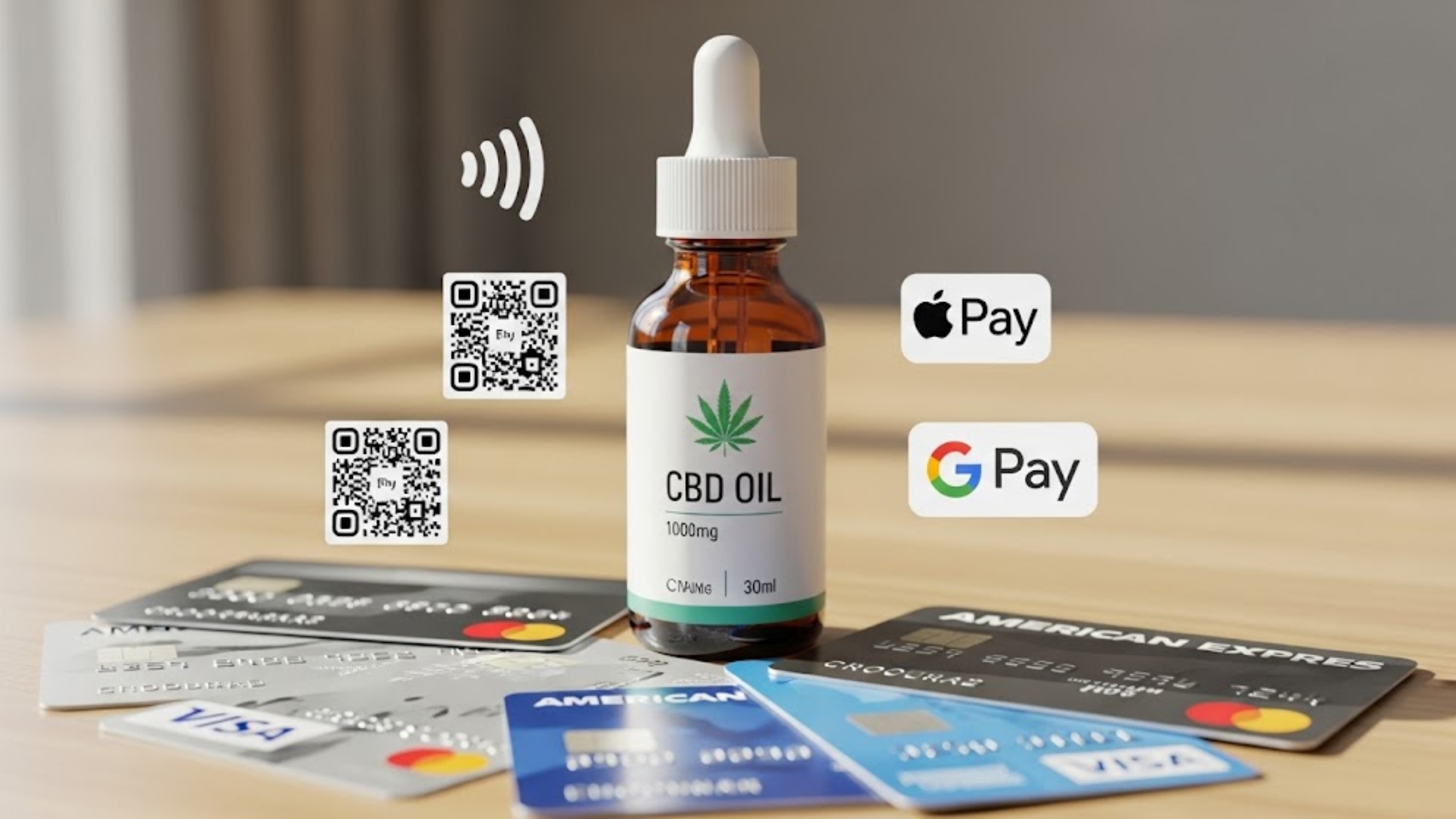
If you sell CBD online or in-store, accepting card payments reliably is the single most important operational challenge you’ll face. CBD is still treated as a “high-risk” vertical by many banks and mainstream gateways, which means higher fees, more paperwork, and elevated risk of sudden account holds or terminations. This guide is a complete, 2,000-word overhaul of our previous post — refreshed with the latest processors, compliance checklists, chargeback strategies, and a practical step-by-step application playbook so you can get approved and stay approved.
Quick TL;DR — Fast answers
-
Top providers (2025): Cathedral Payments, PaymentCloud, PayKings, eMerchant Broker and other specialist high-risk processors repeatedly appear in industry roundups and reviews. These firms specialize in CBD merchant accounts and onboarding for high-risk merchants.
-
Main blockers: PayPal, Stripe and many mainstream gateways either restrict or outright prohibit CBD transactions — don’t rely on them.
-
Must-have docs: Product COAs (ISO/IEC 17025 lab), proof of <0.3% THC if selling hemp-derived CBD, business license, clear merchant website copy (no health claims). Cathedral Payments’ own guide on fast approvals lists these documents as essential.
-
Chargebacks: Use layered fraud prevention, clear billing descriptors, and proactive customer service — chargeback mitigation is essential for survival.
Why CBD payment processing is different?

CBD sits in a tension zone: legal in many places but still stigmatized for banks and card networks. Processors that accept CBD typically operate one of three ways:
-
High-risk domestic merchant accounts — approved by specialist acquirers that accept the category.
-
Offshore or e-money solutions — sometimes faster approvals but more complex compliance and payout logistics.
-
Hybrid solutions + third-party gateways — gateway + acquiring partner combos built specifically for CBD sellers.
Expect higher processing fees, rolling reserves, and extra underwriting. But the right provider will reduce friction, lower freeze risk, and help with chargeback strategies. Recent industry surveys and comparisons consistently highlight specialist high-risk providers as the best path forward.
That’s where high-risk specialists like Cathedral Payments come in.
We work with acquiring banks and payment partners that understand the CBD industry, helping merchants get approved faster, maintain stable processing, and reduce the risk of holds or terminations.
The Role of a CBD Payment Processor
A CBD payment processor acts as a bridge between your business, your customers, and the acquiring bank. It enables you to accept debit and credit card payments securely — online or in person — while ensuring compliance with card network regulations and state-level CBD laws.
What the right CBD processor does for you:
-
Gets you approved with high-risk-friendly banks.
-
Protects you from account freezes and holds.
-
Integrates easily with your eCommerce platform or POS system.
-
Provides chargeback monitoring and fraud prevention tools.
-
Guides you through compliance (COAs, refund policies, and labeling).
Top CBD payment processors in 2025 — who to evaluate
Below are some of the most trusted CBD payment processors in 2025 — including Cathedral Payments, which has become a top-rated partner for merchants seeking stability, support, and transparency.
| Provider | Best For | Key Highlights |
|---|---|---|
| Cathedral Payments | CBD eCommerce, subscriptions, and high-volume merchants | ✅ Fast approvals for CBD & hemp products ✅ 1-on-1 compliance support ✅ Chargeback protection & dispute tracking ✅ Integrates with NMI, Authorize.Net, WooCommerce & Shopify ✅ Transparent pricing, no hidden fees |
| PaymentCloud | Startups & growing CBD stores | Specialized in high-risk industries, offers U.S.-based support and integrations. |
| PayKings | CBD wholesalers & manufacturers | Wide banking network, advanced risk management tools. |
| eMerchant Broker | Multi-channel CBD retailers | High approval rate, recurring billing support, dedicated account managers. |
| SMB Global | International CBD sellers | Offshore CBD payment processing with multi-currency support. |
Why Cathedral Payments leads:
Unlike many providers, Cathedral Payments doesn’t just act as a middleman. Our team guides CBD merchants through the entire process — from application and underwriting to risk monitoring and ongoing compliance — ensuring your business can accept payments confidently year-round.
For merchants using Shopify, our post on Shopify CBD payment processor challenges and fixes offers practical guidance.
Exact application checklist — what processors will ask for?
Having a complete, well-organized pack of documentation speeds approvals and reduces follow-ups. Prepare these before you apply:
-
Certificate of Analysis (COA) for every SKU — preferably from an ISO/IEC 17025 accredited lab. The COA must demonstrate THC levels <0.3% (if you’re selling hemp-derived CBD).
-
Business license and EIN/Tax ID (or equivalent).
-
Product photos and SKU list — clear product descriptions, list ingredients.
-
Website compliance audit — no unproven health claims (“cures,” “treats”), clear refund policy, visible terms and conditions.
-
Bank statements / processing history — processors want to see transaction size and chargeback history.
-
Packaging and labeling scans — proof your labels match COA and legal requirements.
-
POS/fulfillment model description — if subscriptions or recurring billing, disclose how you handle fulfillment and refunds.
Processors often decline applications for missing COAs, ambiguous website copy, or unverifiable supplier relationships. Having everything upfront improves approval speed (3–10 business days is common if documents are complete).
Fees, reserves and what to expect contractually?
Because of the higher perceived risk, CBD payment processing comes with slightly higher fees and stricter terms — but the right provider will help you manage them effectively.
| Category | Typical Range | Notes |
|---|---|---|
| Transaction Fees | 4.5% – 7% per transaction | Varies based on sales volume, chargeback ratio, and business history. |
| Rolling Reserve | 5% – 10% (held 90–180 days) | Used by banks as a safeguard against disputes. |
| Chargeback Fee | $25–$40 per case | Cathedral Payments helps reduce disputes with proactive alerts. |
| Monthly Volume Cap | Custom | Can increase after 90 days of clean processing. |
-
Processing rates: Higher than low-risk retail — interchange + markup or tiered pricing, often adding 4.5%–7% on top of interchange depending on risk profile. Expect quoted rates to be individualized.
-
Rolling reserves: Common. Providers may withhold 5%–10% of funds for a rolling period (e.g., 90–180 days) depending on your risk.
-
Chargeback thresholds: Maintain dispute ratios below provider thresholds (often <1%). Exceeding limits triggers higher reserves or termination. Use the chargeback prevention tactics below.
Chargeback prevention: The Cathedral Payments 7-step strategy
Chargebacks are the single fastest route to account termination. High-risk processors will expect strong mitigation practices.
-
Clear billing descriptors — make company name and phone number obvious so customers recognize charges and call instead of filing disputes.
-
Transparent refund & shipping policies — display them clearly pre-checkout and in post-purchase emails.
-
Proactive customer service — offer a visible support channel with fast response times; capture call logs.
-
Use fraud prevention & AVS/CVV checks — require CVV, prefer AVS matching, and deploy velocity/fraud rules.
-
Subscription best practices — send pre-charge reminder emails and easy cancellation flows.
-
Document proof of delivery & digital receipts — include tracking numbers, signed delivery where possible.
-
Dispute readiness — keep receipts, IP logs, and customer communications in an organized folder for chargeback responses.
Technical tips — how to prepare your ecommerce site for underwriting?
-
Website copy: Remove health claims and medical language. Focus on product facts, CBD origins, and compliance.
-
Product pages: Add COA links (PDF) next to each SKU or in a compliance tab. Processors love one-click access to COAs.
-
Checkout flow: Include clear order confirmation emails with support contact info and billing descriptor reminders.
-
Security: PCI compliance, HTTPS, and up-to-date security headers improve underwriting confidence.
-
Third-party integrations: List your gateway (Authorize.Net, NMI, etc.) — many high-risk processors integrate with these for payment routing.
Choosing between domestic vs offshore processor — pros & cons
Domestic vs Offshore CBD Payment Processing
| Option | Advantages | Considerations |
|---|---|---|
| Domestic (U.S.) Accounts | Faster deposits, U.S.-based support, simpler taxes | Stricter underwriting and reserve requirements |
| Offshore Accounts | Easier approval, global currency options | Longer funding cycles and higher compliance workload |
Cathedral Payments offers both domestic and offshore CBD processing options. We analyze your business model, volume, and product type to match you with the most reliable acquiring partner.
Domestic high-risk processor
-
Pros: Faster payouts, easier banking relationships, simpler tax treatment.
-
Cons: Higher approval standards; sometimes higher fees.
Offshore processor
-
Pros: Faster acceptance in some cases, looser acceptance criteria.
-
Cons: Longer payout times, compliance complexity, potential issues with chargebacks and tax reporting. Evaluate carefully — reputational and logistical costs can add up.
Compliance: Staying on the Right Side of Regulation
CBD businesses face evolving regulations, especially around labeling and health claims.
To avoid costly penalties or account closures:
-
Always publish COAs from certified labs on your website.
-
Avoid unverified claims (like “treats anxiety” or “cures pain”).
-
Maintain a clean refund policy visible before checkout.
-
Renew business and hemp licenses annually.
-
Use HTTPS and PCI-compliant checkout pages to protect customer data.
✅ Cathedral Payments clients receive a quarterly compliance check — ensuring your merchant account stays in good standing even as regulations evolve.
Real-world onboarding playbook (step-by-step)
-
Audit your site and products (COAs, remove medical claims).
-
Assemble docs (COAs, licenses, bank statements, processing history).
-
Choose 3 target processors (one primary, two backups — e.g., PaymentCloud, PayKings, eMerchant Broker as contenders).
-
Apply with full documentation — don’t submit partial packs.
-
If declined, get the decline reason and fix the issues (often missing COA, unclear website copy).
-
After approval, implement chargeback prevention (billing descriptors, fraud tools, customer service playbook).
Building Trust: Why Processors Value Transparency
Banks and card networks trust merchants who maintain full transparency about their supply chain, ingredients, and policies. That’s why Cathedral Payments recommends setting up a “Transparency & Testing” section on your website — showing your lab results, sourcing info, and legal disclaimers.
This not only improves your underwriting chances but also boosts SEO trust signals, helping your website rank higher for competitive keywords like CBD merchant accounts or CBD payment gateways.
Bonus: SEO & marketing considerations for CBD merchants
-
Don’t rely on Google/Meta paid ads without LegitScript certification — ad platforms have strict rules; alternative channels (email, organic SEO, influencers) are often more reliable.
-
Content strategy: Publish compliance pages (COA policy, lab testing, return policy) — these pages are often referenced by processors during underwriting and help organic traffic.
-
Local payments: If you do retail, ensure your POS provider is compatible with your merchant account and that in-store receipts match online billing descriptors.
Comparison snapshot (short)
| Feature | PaymentCloud / PayKings / eMerchant Broker (specialists) | PayPal / Stripe / Shopify Payments |
|---|---|---|
| Accept CBD? | Yes — with underwriting + docs. | No / restricted — generally disallowed for CBD. |
| Integration | Authorize.Net, NMI, custom | Easy for low-risk merchants |
| Fees | Higher; reserves common | Lower, but restricted |
| Chargeback support | Built for high risk | Not available for CBD merchants |
Cathedral Payments: Your Trusted CBD Payment Processing Partner
For over 15 years, Cathedral Payments has specialized in high-risk payment solutions, helping thousands of CBD, hemp, vape, and supplement merchants build sustainable, compliant businesses.
Why CBD merchants choose Cathedral Payments:
-
✅ Dedicated CBD underwriting team familiar with federal and state laws.
-
✅ Fast approvals — often within 3–7 business days.
-
✅ Direct banking relationships with high-risk-friendly acquirers.
-
✅ Zero setup fees and transparent pricing.
-
✅ U.S.-based support with ongoing compliance audits.
Whether you’re launching a new CBD brand or scaling an established one, we provide end-to-end payment solutions — from merchant accounts and gateways to chargeback prevention and fraud protection.
📞 Call 855 400-4519 or apply online for a free consultation with our CBD payment experts.
FAQs
Q1: Can Stripe or PayPal process CBD payments?
A: Generally no — both platforms’ acceptable use policies exclude CBD in most cases. For reliable card acceptance, use a specialist high-risk processor.
Q2: How long does it take to get approved for a CBD merchant account?
A: With complete documentation (COAs, licenses, bank statements) expect 3–10 business days for typical approvals, though complex histories can take longer.
Q3: What is a COA and why do processors want it?
A: A Certificate of Analysis (COA) is a lab report proving cannabinoid levels (including THC). Processors require COAs to verify that products meet legal THC limits and to reduce bank risk.
Q4. What’s the average processing rate for CBD merchants?
Rates range from 4.5% to 7%, depending on volume, chargeback history, and risk profile.
Q5. Can Cathedral Payments integrate with my existing website?
Absolutely. Our CBD payment gateway works seamlessly with WooCommerce, Shopify, BigCommerce, Magento, and custom sites.