
Gateway failures can cost businesses sales, damage customer trust, and disrupt recurring revenue models. Understanding the causes of these failures and how to avoid them is crucial for any business relying on online transactions. If you’re using modern payment gateways, knowing how to reduce downtime is part of building a reliable digital payment infrastructure.
In this guide, we’ll explain what leads to gateway outages, how to diagnose performance issues, and what steps you can take to ensure smooth, uninterrupted payment processing.
What Is a Gateway Failure?
A gateway failure occurs when a payment gateway cannot process a transaction request due to an internal error, connectivity problem, or third-party disruption. It prevents a customer from completing a purchase or a business from capturing a recurring payment.
Gateway failures can be:
- Temporary (minutes to hours)
- Localized (specific to one server or region)
- Widespread (affecting all transactions across providers)
Common Causes of Gateway Failures
Understanding the root causes of gateway failure can help you choose more resilient payment gateways and implement safeguards. Here are the most frequent issues:
1. API Timeout or Server Overload
When traffic spikes or server resources are under strain, the gateway may time out. This happens especially during flash sales or seasonal demand peaks. Gateways like Stripe or Authorize.Net usually scale well, but lower-tier providers may not.
2. DNS or Routing Issues
Domain Name System (DNS) errors or improper routing can cause transactions to never reach the gateway server. This is usually caused by improper configurations or regional DNS propagation issues.
3. Scheduled Maintenance or Updates
Sometimes, gateways schedule upgrades or routine maintenance, which can make parts of their service temporarily unavailable. If not clearly communicated, this can surprise merchants and disrupt live transactions.
4. Third-Party Dependencies
Gateways often rely on card networks, acquiring banks, or identity verification services. If one of these third parties goes offline or delays response, the gateway can also fail.
5. Fraud or Compliance Flags
If a transaction is flagged for suspected fraud or hits risk filters (e.g., due to unusual IP or velocity checks), the gateway may auto-decline or block the transaction.
6. Poor Integration or Code Errors
Custom integration errors or deprecated API calls can trigger transaction errors. If your dev team didn’t properly handle gateway responses, failed requests may not be retried or recorded, resulting in revenue loss.
7. Gateway Misconfiguration
Incorrect API keys, account restrictions, or expired tokens can all trigger failures. This is common when developers update systems without syncing with gateway settings.
Impact of Gateway Downtime on Business
A failed payment gateway doesn’t just result in lost transactions—it can create ripple effects across your operations:
- Lost Revenue: Especially harmful during product launches or sales events.
- Customer Frustration: Failed checkouts reduce trust and lead to cart abandonment.
- Involuntary Churn: For subscription businesses, failed recurring payments can lead to cancellations.
- Chargeback Risk: Customers attempting multiple times might be double-charged, leading to disputes.
How to Diagnose Gateway Failures
Before you blame the gateway, make sure the issue isn’t due to local configuration or network settings. Here’s how to troubleshoot:
- Check your gateway provider’s status page (e.g., Stripe Status, PayPal Status)
- Review recent API logs for error codes (e.g., 502 Bad Gateway, 408 Timeout)
- Confirm DNS is resolving properly from multiple locations
- Test API credentials and configuration tokens
- Use real-time monitoring tools to simulate transactions
If your current gateway doesn’t offer detailed logging or support, consider switching to one of the Best Payment Gateways that offer better diagnostic tools.
Best Practices to Prevent Gateway Downtime
While no system is 100% immune to downtime, you can greatly reduce the impact with these strategies:
1. Choose a Gateway with High Uptime Guarantee
Look for providers with 99.9%+ uptime and published service level agreements (SLAs). Ask for historical performance data before signing up.
2. Use Multiple Gateways or a Fallback Processor
If your business relies on continuous transactions (e.g., eCommerce or SaaS), consider routing transactions through multiple gateways. Tools like Recurly or custom failover logic can help.
3. Monitor Gateway Performance in Real-Time
Use services like Pingdom, UptimeRobot, or custom alerts to monitor transaction speeds and errors. Many gateways offer webhook alerts when issues occur.
4. Validate API Keys and Renew Tokens Periodically
Avoid outages caused by expired credentials by rotating and securely storing keys. Automate reminders or use vault services to manage access.
5. Stay Updated with Provider Notices
Subscribe to status updates, maintenance alerts, and developer changelogs from your payment gateway provider.
6. Design Checkout Flows with Graceful Fallbacks
If the transaction fails, offer a retry option or alternative payment method (like PayPal or Apple Pay) to reduce drop-offs.
7. Work with a Gateway That Offers Support
Some providers, like Cathedral Payment, offer personalized assistance and faster resolution times for gateway-related issues. This is especially important if you’re in a high-risk or high-volume business.
Which Payment Gateways Have the Best Uptime?
Based on third-party monitoring and published stats:
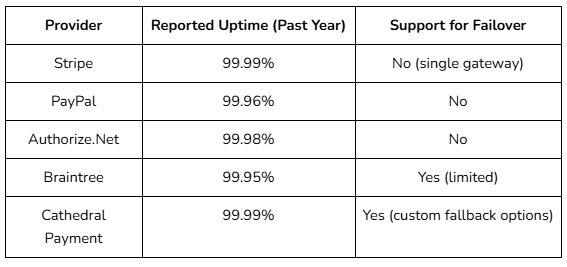
Uptime data is based on published status pages and external monitoring tools.
What to Ask Before Choosing a Gateway
When vetting a provider, ask:
- What is your average uptime over the last 12 months?
- Do you offer multi-gateway routing?
- How fast is your technical support response time?
- What kind of monitoring and alerts are available?
- How do you handle traffic spikes or card network downtime?
Conclusion:
Payment gateways are mission-critical infrastructure for online businesses. A failure—even a short one—can lead to lost revenue and unhappy customers. That’s why proactive monitoring, choosing high-reliability providers, and setting up redundancy should be part of every payment strategy.
If your current provider doesn’t offer transparency or uptime you can trust, consider switching to Cathedral Payment. We help you reduce downtime risk with reliable infrastructure, failover routing, and proactive support.
Stay prepared, stay paid—and let gateway failures be a thing of the past.