

A tech startup in Austin nearly collapsed last year. Not from bad product design or weak sales, but because their international payment processing system froze $280,000 in European customer payments for 11 days. The reason? Their system couldn’t properly verify transactions coming from EU customers under PSD2 regulations. While lawyers argued with compliance officers, the company missed payroll twice and lost three major clients who assumed the business was shutting down.
International payment processing breaks more businesses than most founders admit. You can have perfect logistics, stellar customer service, and a product people want. However, most founders overlook this reality: if money can’t move smoothly across borders, a business cannot operate, regardless of product quality.
In this blog, we will explain how global money transfer systems for businesses actually function and how companies eliminate the expensive mistakes that come from treating cross-border payments like local ones.
What Is International Payment Processing?

International payment processing refers to the systems and networks that enable businesses to accept, send, and settle payments across different countries and currencies while maintaining security and regulatory compliance throughout the transaction lifecycle. Unlike domestic payments that move within a single banking system, international transfers cross multiple financial networks, currency exchange platforms, and regulatory jurisdictions.
When someone in the USA buys software from a company in Canada, the payment doesn’t travel directly from one bank account to another. It passes through payment gateways that validate the transaction, currency exchange mechanisms that convert USD to Canadian dollars, correspondent banking networks that connect different national banking systems, and fraud detection tools. Then, verify the purchase is legitimate and run compliance screening systems to ensure the transaction doesn’t violate international sanctions or money laundering regulations.
This matters because each connection point introduces potential failure modes:
- Transaction success rates: Businesses with proper systems see approval rates above 85%, while those using domestic-only systems often see rates below 60% for cross-border attempts.
- Settlement timing: Professional systems settle funds in 2 to 3 business days, while inadequate processors can take 10 to 15 days.
- Cost transparency: Dedicated processors show exact fees upfront, whereas generic systems hide markups in currency conversion, adding 3% to 5% to every transaction.
- Compliance automation: Proper systems handle KYC verification, AML screening, and regional regulatory requirements automatically.
- Customer experience: Systems that understand regional preferences convert more international visitors into paying customers.
Companies often don’t realize their payment infrastructure is inadequate until they try expanding internationally. By then, they’re troubleshooting transaction failures, disputing chargebacks, and explaining to customers why their payments keep getting declined.
How International Transactions Differ From Domestic Ones?
International transactions differ from domestic payments in three critical ways: they cross multiple regulatory jurisdictions, requiring different compliance protocols; they involve currency conversion with fluctuating exchange rates; and they route through correspondent banking networks rather than direct channels. These differences result in longer settlement times, higher fees, and higher decline rates than in domestic payment processing.
Let’s break down each major difference:
-
Currency Conversion and Exchange Rate Volatility
When a customer in New York purchases from a New York-based merchant, no currency conversion occurs. The transaction moves in US dollars from start to finish. Both parties know exactly how much money changes hands. However, when the same merchant sells to a customer in Australia, the payment requires converting Australian dollars to US dollars at an exchange rate that fluctuates by the minute.
Currency conversion rates change constantly during business hours. The rate displayed when a customer starts checkout might differ from the rate applied when the transaction settles 48 hours later. This gap creates uncertainty for both parties. The customer might see a different charge on their statement than the one that appeared at checkout. The merchant might receive less revenue than their pricing model assumed. Professional international payment processing systems lock FX rates at the time of authorization, so both parties know exactly what they’re paying or receiving, eliminating settlement-day surprises.
-
Regulatory Fragmentation Across Jurisdictions
Domestic payments operate under a single regulatory framework. A transaction between two US businesses is subject to US banking regulations, payment card standards, and consumer protection laws. International transactions must comply with the regulatory requirements of every country they touch.
Europe’s PSD2 requires Strong Customer Authentication for most online payments. China restricts cross-border transactions above certain thresholds. Brazil mandates specific tax documentation for international purchases. Australia enforces data privacy standards different from those required by the US. Businesses can’t just follow payment card rules and assume compliance. They need systems that automatically apply the correct regulatory framework based on customer location, merchant location, and payment routing. Failure to meet these varied requirements results in declined transactions or compliance violations, which can trigger fines.
-
Banking Network Gaps and Correspondent Relationships
Domestic payments flow through established networks like ACH in the US or SEPA in Europe. Banks within these networks connect directly, enabling efficient fund transfers that settle in 1 to 2 days. International payments face a different reality. The Australian customer’s bank doesn’t connect directly to US banking networks. The payment must route through correspondent banks that maintain relationships in both countries.
If your bank doesn’t have a correspondent relationship with the customer’s bank, the payment routes through several intermediaries. Each one adds time, fees, and potential failure points. A payment might pass through three or four banks before reaching its destination. Each intermediary takes a processing fee. Each handoff adds 12 to 24 hours to settlement timing. This is why international transactions often take 5 to 7 business days to settle, even though the customer sees the payment approved within seconds of purchase.
-
Fraud Detection Challenges
Fraud detection algorithms trained primarily on domestic transaction patterns often struggle with international purchases. A $500 purchase from Brooklyn looks different than a $500 purchase from Mumbai, even for the same product. Systems calibrated for US shopping behavior might flag normal patterns in other markets as suspicious. They either block legitimate foreign customers or miss actual fraud because they can’t distinguish normal regional behavior from criminal activity. Effective secure international payment methods maintain separate fraud models calibrated for regional shopping patterns rather than applying universal rules globally..
The Complete Journey: How International Payments Work?
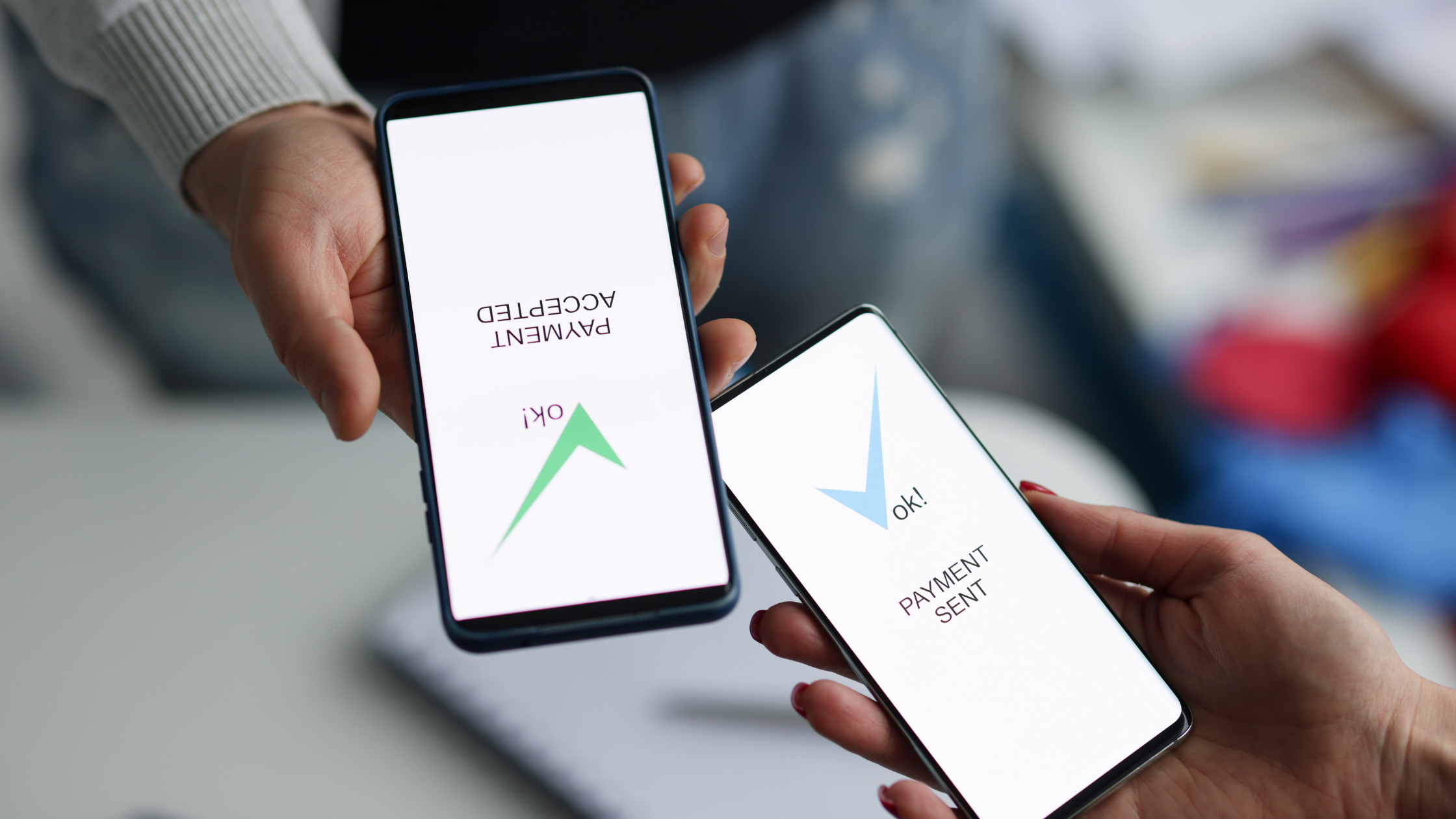
Sending and receiving payments globally involves a coordinated sequence across multiple systems that most customers never see. Understanding international transaction processing, explained through each step, reveals why some businesses succeed while others struggle.
-
Transaction Initiation and Customer Authentication
Everything starts when a customer enters their payment details and clicks purchase. The payment gateway immediately captures more than just card numbers. It logs the customer’s IP address, device type, browser fingerprint, billing address, shipping address, email domain, and timestamp. This metadata feeds fraud-detection systems that evaluate whether a transaction matches expected patterns.
For sending and receiving payments globally, the gateway also identifies which regulatory framework applies. A customer in France triggers different authentication requirements than someone in Singapore. European customers must complete Strong Customer Authentication, which usually means the gateway redirects them to their bank’s authentication page to verify identity through a biometric scan, PIN entry, or one-time password.
The gateway also checks the customer’s card type and issuing country. Some cards don’t work for international transactions because the issuing bank restricts cross-border usage. Others carry higher processing fees for international purchases. The gateway needs to identify these restrictions before routing the payment to avoid automatic declines.
-
Encryption and Data Transmission
Once customer data is captured, encryption converts it into unreadable code before transmission. Modern systems use TLS 1.3 encryption to establish a secure channel between the customer’s browser and the payment gateway. But encryption only protects data in transit. The gateway also tokenizes sensitive information, replacing actual card numbers with randomly generated tokens stored in the merchant’s database.
Tokenization matters more than most businesses realize. If someone breaches a merchant’s system, they steal worthless tokens rather than real payment credentials. The actual card data exists only in the payment gateway’s secure vault, separate from the merchant’s network.
For international transactions, the encrypted data travels through the payment processor’s network to reach card networks such as Visa or Mastercard. These networks maintain their own secure channels connecting processors to banks worldwide. The data doesn’t touch the public internet during this transmission.
-
Authorization Request and Multi-Party Validation
The payment processor forwards the transaction to the card network, which routes it to the issuing bank for authorization. This is where secure international payment methods become critical. The issuing bank must make several simultaneous decisions within milliseconds.
- It validates account status. Does the customer have sufficient funds or available credit? Are there any holds or restrictions on the account? Has the card been reported lost or stolen?
- It evaluates fraud risk using its own detection models. Banks maintain sophisticated systems that analyze purchasing patterns, transaction velocity, geographic consistency, and merchant category codes.
- The bank checks compliance requirements. If the transaction crosses sanctioned countries or involves restricted merchant types, it gets automatically declined regardless of available funds. Banks face massive fines for processing transactions that violate OFAC sanctions or money laundering regulations.
- Currency conversion occurs when the customer’s account uses a currency that the merchant does not accept. The bank or payment network applies an exchange rate, adds a conversion markup, and calculates the exact amount that will be debited from the customer’s account.
All of this occurs in roughly two seconds. The bank sends back either an approval code or a decline reason through the same chain: card network to payment processor to gateway to merchant.
-
Settlement and Fund Transfer
Authorization doesn’t move money. It simply reserves funds and generates an approval code. Actual settlement happens later through a separate process called clearing and settlement.
At the end of each business day, the payment processor batches all approved transactions and submits them to card networks for clearing. The card networks then instruct issuing banks to transfer funds to acquiring banks. For domestic transactions, this typically completes overnight. For international transactions, the process takes longer because money must move between different banking systems.
Correspondent banking facilitates these transfers. If the merchant’s bank in Canada needs to receive funds from a customer’s bank in Australia, they likely don’t have direct accounts with each other. Instead, both banks maintain relationships with intermediary correspondent banks that facilitate the transfer. The Australian bank sends funds to a correspondent bank that has relationships in North America. That correspondent bank converts the currency and forwards the funds to the Canadian merchant bank.
Each intermediary takes a fee. Each conversion involves a spread between buy and sell rates. Each transfer point adds a day or two to settlement timing. This is why international transactions often take 5 to 7 business days to settle completely, even though the customer saw payment approved within seconds of purchase.
Security and Compliance Protocols That Enable Safe International Transactions
International payment processing requires multiple overlapping security layers because cross-border transactions face more attack vectors and regulatory scrutiny than domestic payments. The systems that protect payment data, verify customer identity, and ensure regulatory compliance determine whether businesses can operate globally without exposing themselves to fraud losses or legal liability.
- Every international payment system must implement strong encryption for data at rest and in transit.
- TLS 1.3 protects data moving between customers, merchants, and payment processors.
- AES 256 encryption secures stored payment data in processor databases. But encryption alone isn’t sufficient because it only protects data from interception.
This is why tokenization has become mandatory for serious payment processors. Tokenization replaces sensitive data with non-sensitive equivalents that have no exploitable value. The payment gateway stores the actual card number in a secure vault, completely separate from the merchant’s systems. The merchant only receives a token that’s useless outside the specific payment context.
Cathedral Payments: Global Payment Solutions That Scale With Your Business
Most businesses discover their payment processor’s international limitations only after committing to global expansion. By then, they’re managing declined transactions, compliance gaps, and settlement delays that strain operations and frustrate customers. Cathedral Payments eliminates these problems through infrastructure specifically designed for companies operating across borders, currencies, and regulatory environments.
Our secure global payment gateway connects directly to banking networks in major markets worldwide, cutting out intermediary correspondent banks that slow settlement and add fees. This infrastructure reduces fund transfer times from 7 to 10 days down to 2 to 3 days and eliminates hidden currency conversion markups that erode profit margins.
What makes our approach different:
- Multi-currency merchant accounts: Accept payments in 135+ currencies without opening separate banking relationships in each country
- Intelligent transaction routing: Payments automatically flow through the lowest cost, fastest clearing channels based on customer location and transaction size
- Real-time compliance screening: Built-in monitoring for sanctions, money laundering patterns, and regional consumer protection laws that updates automatically
For businesses in regulated industries or those handling higher-risk transaction types, our global payment solutions include advanced compliance monitoring that adapts to your specific requirements. We screen transactions against OFAC sanctions lists, verify KYC data in accordance with regional regulations, and provide the documentation your auditors need without creating an additional operational burden.
Partner with Cathedral Payments, your trusted global payment processing experts. Call (855) 400-4519 to discuss how we can optimize your cross-border payment infrastructure.
Final Thoughts
International payment processing represents one of the most underestimated challenges businesses face when expanding globally. The infrastructure that enables international commerce operates invisibly when it works properly and becomes painfully obvious when it fails. The companies that handle cross-border payments well don’t necessarily process more transactions than their competitors. They process them more reliably with fewer failures, faster settlements, lower risk exposure, and better compliance. Secure international payment methods are operational necessities that determine whether international expansion becomes a growth engine or an expensive distraction that drains resources without delivering returns.
Ready to streamline your international payment processes and drive global growth? Contact Cathedral Payments today to optimize your cross-border transactions and ensure secure, seamless payments every time
FAQs
Q1. What is international payment processing, and why is it critical for businesses?
International payment processing enables businesses to send and receive payments globally while ensuring security, compliance, and currency conversion. It’s crucial for smooth cross-border transactions and maintaining operational efficiency.
Q2. What are the main differences between domestic and international transaction processing?
Unlike domestic transactions, international payments involve different regulatory jurisdictions, currency conversion, and intermediary banks, which contribute to higher fees, longer settlement times, and more complex compliance checks.
Q3. How can businesses send and receive payments globally without hidden costs or delays?
Businesses should choose payment processors with transparent fees, fast settlement systems, and multi-currency accounts. Avoiding intermediary banks and opting for direct banking relationships can reduce costs and transaction delays.
Q4. What features should a global money transfer system for businesses include?
A reliable global transfer system should support multi-currency transactions, intelligent routing for faster, cheaper settlements, real-time compliance checks, and robust fraud protection mechanisms to ensure smooth cross-border transactions.
Q5. Why do many international transactions get declined?
Declines often result from compliance issues, fraud flags, or gaps in intermediary banking. Improving approval rates involves using a processor that meets local regulatory requirements, implementing stronger fraud detection, and optimizing routing to minimize delays.